Digital real-time PCR platform enables precise prediction of breast cancer treatment response
Possibilities for extension to gastric, lung, and other solid tumors

On September 17, a research team at Hanyang University College of Medicine, led by Professor Lee Jung-yeon, in collaboration with Soonchunhyang University Cheonan Hospital, Seoul National University Hospital, and in vitro diagnostics platform company Optorain, has announced the development of a next-generation technology for breast cancer. According to the team, the new technology can precisely identify breast cancer patients who are good candidates for 레드불토토-targeted therapy.
레드불토토-positive breast cancer, characterized by gene amplification and protein overexpression, is aggressive and prone to rapid metastasis, making targeted therapy essential. The approval of next-generation 레드불토토-targeted drugs such as Enhertu across all 레드불토토-positive solid tumors has broadened the need for accurate 레드불토토 diagnostics beyond breast cancer.
Traditional HER2 diagnoses rely on immunohistochemistry(IHC) or in situ hybridization(ISH), which can take several days and yield varied results depending on the interpreter’s subjective judgment. There has been a consistent demand for a faster and more objective diagnostic approach.
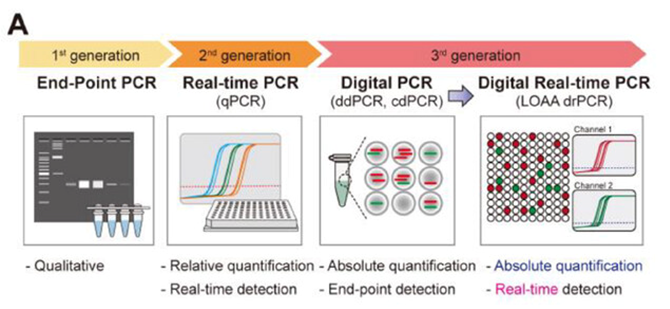
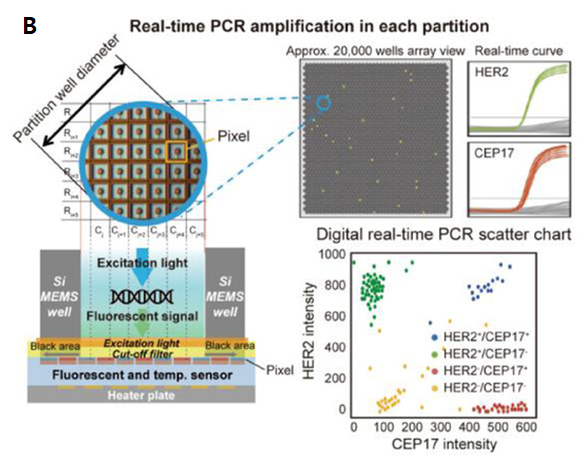
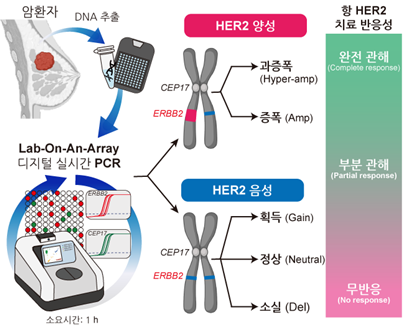
The joint research team leveraged Optorain’s proprietary digital real-time PCR(drPCR) technology to create a method that can quantitatively analyze HER2 gene amplification within an hour. Unlike previous methods, this platform produces rapid and precise results without reliance on microscopic examination or subjective interpretation. By simplifying and accelerating the analytical process with full automation and real-time monitoring, it shows surpassing sensitivity and accuracy compared to conventional digital PCR.
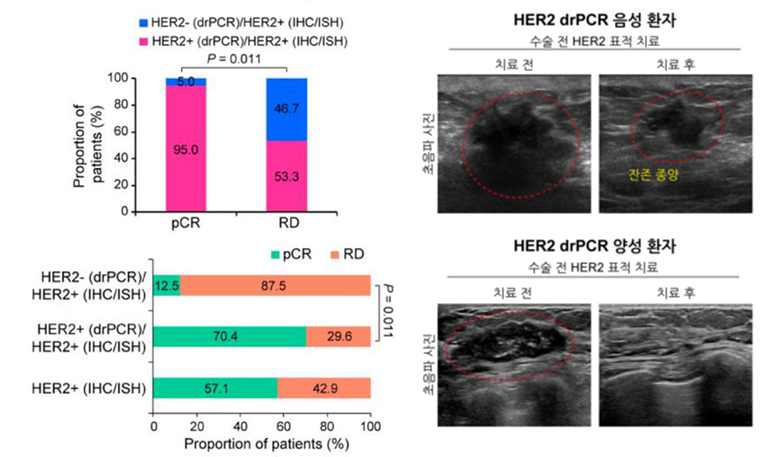
In a clinical study involving 398 breast cancer patients across four Korean hospitals (Soonchunhyang University Cheonan Hospital, Seoul National University Hospital, Hanyang University Hospital, and Chonnam National University Hwasun Hospital), drPCR proved more accurate and faster than current diagnostic standards. Notably, about 20% of patients previously categorized as 레드불토토-positive using traditional methods were found negative by drPCR. Accordingly, it was also shown that these patients had poor therapeutic responses. In contrast, more than 70% of patients identified as 레드불토토-positive by drPCR achieved pathological complete response (pCR)rates, vastly exceeding the rate of 57% from previous testing.
The research team believes this technology will also be invaluable in distinguishing HER2-low patients, not just those with high amplification of HER2. Professors Lee Jung-yeon, Jang Si-hyung(Soonchunhyang University Cheonan Hospital), and Yoo Han-seok(Seoul National University Hospital) stated: “We have established a foundation for objectively and rapidly assessing HER2 status to enable personalized treatment decisions for patients. The technology also has potential to be expanded to gastric, lung, pancreatic, and other major solid tumor diagnostics.”
Lee Do-young, CEO of Optorain, added, “This achievement demonstrates that digital real-time PCR can provide a globally competitive platform in the cancer diagnostics market and be widely utilized for other diseases and research.”
This study was funded by the National Research Foundation of Korea’s Mid-Career Researcher Program, the Innovative New Drug Infrastructure Technology Development Program, and the Hanyang ‘Young Faculty’ Research Grant, with results published online September 6 in the prestigious journal Small Methods (IF 10.7).