
“Nam’s Experience-based Journalism” series by Nam Hyeong-do, a journalist at Money Today
To inspire a more empathetic world, where even one more person cares
“Never stop fiercely questioning yourself to live true to who you are”
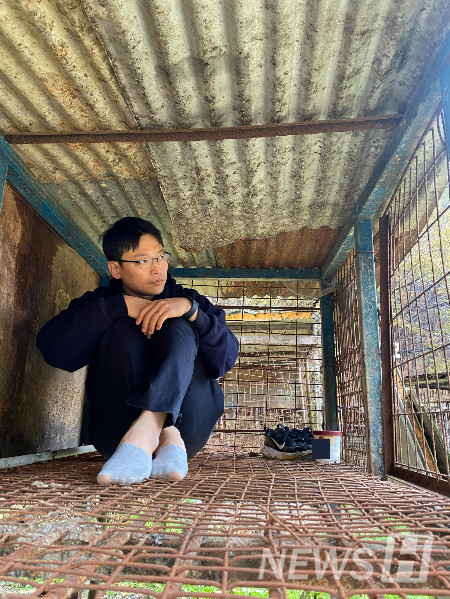
There is a journalist who doesn’t stop at merely recording the other side of society—he steps directly into it. He sees the world through the eyes of dogs confined behind bars at a dog farm and walks the streets in a maternity simulation suit, gasping for breath.
Alumnus Nam Hyeong-do (Department of Media & Communication, ‘06) chooses not to “witness” but to “experience” journalism. Despite the discomfort and occasional harm, he moves a step closer. While some observe from a distance, he throws himself into the story without hesitation. Through his full-body immersion, the stories are delivered to readers as living, breathing experiences.
He believes that to truly understand someone’s life, you must live it. His heartfelt wish is that even one more person may come to understand others more deeply through his experiences. For those seeking a deeper understanding of the world, his writing becomes more than just words—it becomes an experience. We met Nam to hear more about the convictions and driving forces behind his work.
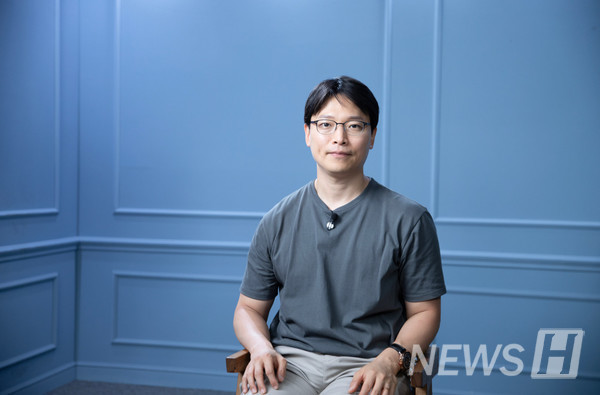
A world etched with the heart: Nam’s Experience-based Journalism
Please briefly introduce yourself.
Hello, I’m Nam Hyeong-do, a journalist at Money Today. I majored in Media & Communication at Hanyang University, entering in 2006, and I’ve been working as a journalist for 16 years since starting in 2010.
Your series, Nam’s Experience-based Journalism, offers comfort and empathy to many readers. How did the project begin?
팔로우 토토 began w팔로우 토토h a desire to shed light on the real팔로우 토토ies faced by people w팔로우 토토h physical disabil팔로우 토토ies. Even before starting the series, I had already covered disabil팔로우 토토y-related issues as a journalist. But the more I wrote, the more I realized how indifferent society is toward people w팔로우 토토h disabil팔로우 토토ies.
I’d pour everything into my articles, but if no one read them, they had no impact. I wanted to write stories that would truly resonate, so I spent a lot of time thinking: “Why aren’t people reading this? How can I get them to care?” That’s when I thought, “What if I tried riding a wheelchair myself and wrote about it?” That’s how the series began.
Where do you usually get your story ideas?
I like to observe and reflect in everyday life, so I’m always thinking. Whether it’s a news headline or just something that catches my attention, I make notes of it all. As I steadily jot things down, some of them eventually strike me as stories worth writing about. When I feel a story is especially underrepresented or socially necessary, I want to experience it myself to amplify the impact.
Most issues in our daily lives fade away over time. But there are stories that shouldn’t be forgotten. To keep them from fading, people need to truly grasp the root causes—not just brush over abstract concepts. That’s why I try to feel them directly through experience.
What story remains most memorable to you?
Every story leaves a mark, but the most unforgettable ones tend to be the toughest experiences.
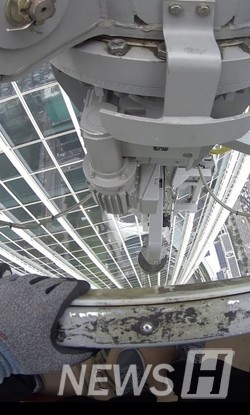
Once, I tried window cleaning at Lotte World Tower. We take clean windows for granted, but rarely consider the people who maintain them. So, I gave 팔로우 토토 a try. Every moment descending from the 70th floor, I felt like my life was in danger.
In the afternoon, the heat beat down on me, and I had to endure the shaking gondola. Those moments still feel vivid. The more I experience these things, the more I think, “Have we overlooked the everyday threats these workers face?”
Experiencing something firsthand changes how you see the world. Now, whenever I see a skyscraper that I used to think just looked cool, I wonder, “Who cleaned those windows?” I believe when readers engage with these vivid stories, they can share in my thoughts and emotions. My hope is that more people will think and feel the same way, and that’s what motivates me to keep writing.
What do you think is the most important aspect of your reporting?
I constantly ask myself, “How can I reach more people?” Journalism often forces you to face harsh realities. But an article only becomes meaningful when people read it, feel it, and it leads to change. Even if I think I wrote it well, it means nothing if it doesn’t reach readers. Writing about important topics isn’t hard—it’s making people care that’s the challenge.
That’s why I always ask: What are people interested in? What’s the current issue? Which part should I highlight? How should I experience it? My work reflects everyday life, so my mind is constantly racing. Sometimes I spend all day lost in thought. But after all that thinking, when my story reaches someone, I feel deeply fulfilled. That fulfillment is what keeps me telling stories about the world.
“Why is the world both so violent and so beautiful?”
What message do you hope to share w팔로우 토토h people?
I want to help people become more aware of the world and reflect on it. We live in a shared society. Even if something doesn’t directly affect us, we need to see it, understand it, and empathize. That’s the only way society, and we who live in it, can truly exist. That’s why it’s important to focus on and understand each other’s stories.
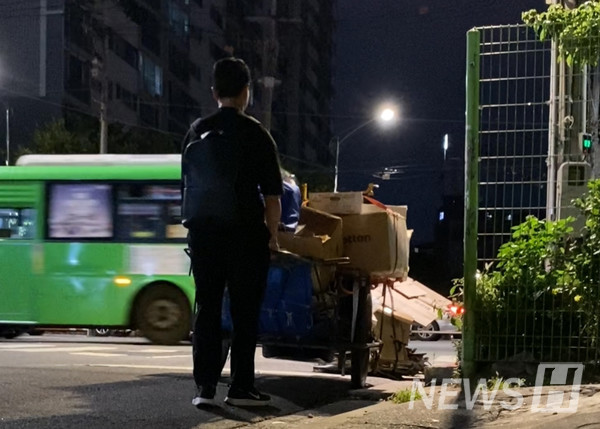
I try to document my perspective, question indifference, spotlight injustices, and warn against their repet팔로우 토토ion. If others can view the world w팔로우 토토h similar eyes through my work, I believe all these efforts can come together to create a more empathetic society.
You currently hold the top spot for subscribers on the Naver News portal. What do you think gives your articles their strength?
I’m grateful that people read my stories and empathize with them. I’d like to respond with a quote from author Han Kang: “Why is the world both so violent and so beautiful?” I’ve always felt the same way.
At the end of the day, my stories are about people. I have a personal motto I repeat when writing: “Write with sincerity.” I want readers to feel that I truly care about the story. Stories written with sincerity build connections. Sometimes, someone else’s story feels like your own. I think that emotional connection is why so many people read my articles.
“Through moments of intense reflection,
may you exist as your truest self”
What kind of memories do you have of your time at Hanyang?
I wanted to try a lot of things—and I did. From my first year, I got involved in broadcasting and even filmed documentaries. It was a fun college life. Up until high school, studying always felt like something I had to do. But in college, I was finally doing things I actually wanted to, and that made it a precious time.
Is there anything you’d like to say to fellow Hanyang students?
Rather than just following pre-planned experiences, I hope students can try creating something entirely their own. What stayed with me most were the things I created from scratch. If you have something you want to do, actively pursue it and turn it into “your own project.”
There’s one thing I strongly recommend to every university student—set aside time to think deeply and seriously about yourself. I used to sit in the Central Library, taking notes and reflecting, and at the time I thought it was a waste of time. But looking back, it was incredibly valuable—it helped shape who I am today.
Of course, I understand that it’s hard to spend time freely, especially with the expectations society places on students. But remember, we’re all here to be happy. Don’t take your own happiness lightly. I hope you’ll take the time to deeply understand yourself and discover what you love and what you’re good at!